 Skip to content

Vi-LiDAR
As a key regional energy provider, Linqing Thermal Power Plant plays a critical role in electricity and district heating supply. With an annual power generation capacity of 3.5 billion kWh and annual heat supply of 14.7 million GJ, the plant serves both industrial users and residential heating demands, acting as a backbone for local energy security.
In such a high-load, continuous-operation environment, continuous monitoring of the conveyor belt system is critical—and any unplanned shutdown is unacceptable. Ensuring stable and predictable operation of the coal conveying system is therefore essential to achieving the plant’s long-term goal of zero unplanned outages.

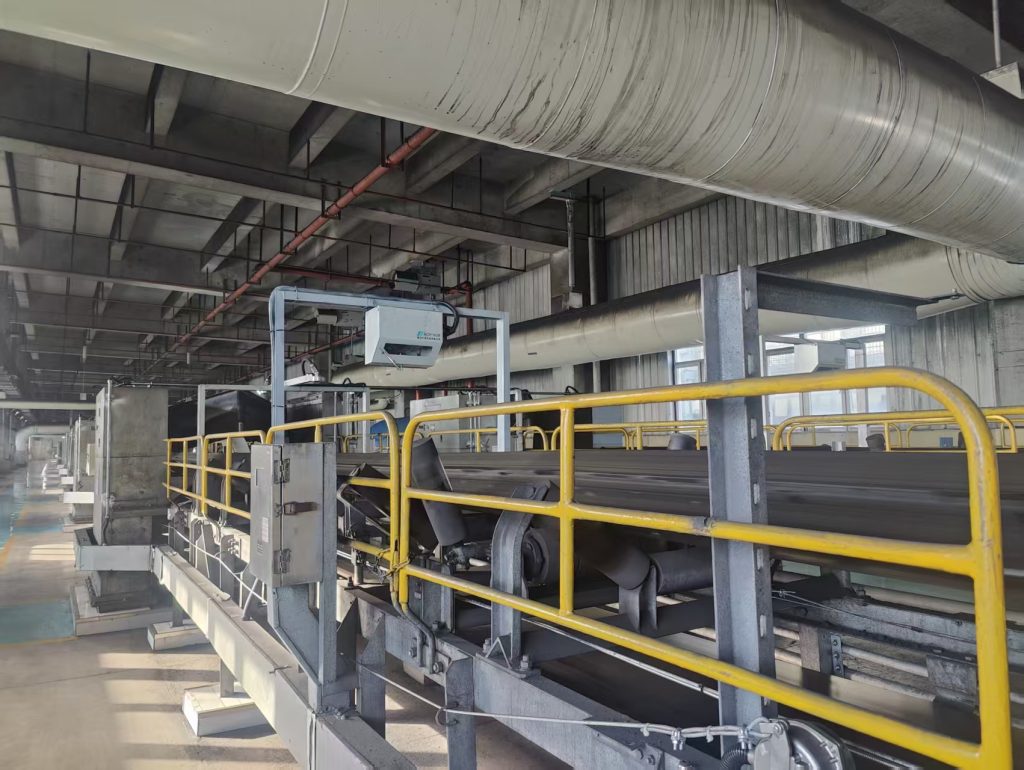
Vi-LiDAR ( 3D point cloud model of Conveyor Belt )
Operational Challenges in Coal Conveying
Despite a mature generation infrastructure, the coal handling system faced several structural challenges:
- High daily coal throughput, increasing the risk of material accumulation and blockage
- Severe dust conditions in conveyor galleries, making manual inspection inefficient and unsafe
- Lack of real-time visibility into actual material flow conditions
- Coal feeding operations relied largely on manual checks and operator experience
- No possibility of production interruption for inspection or measurement system installation
These constraints made traditional contact-based or intermittent monitoring methods unsuitable.
Solution Overview: Non-Contact, Real-Time Material Flow Sensing
VI LiDAR Technology deployed a LiDAR-based conveyor belt material flow measurement system, designed specifically for continuous industrial operation.
The system integrates:
- 3D LiDAR scanners for continuous cross-sectional profiling of material on the belt
- Industrial cameras for operational status verification and auxiliary condition monitoring
This non-contact configuration enables real-time measurement without stopping the conveyor or modifying existing mechanical structures, fully complying with power plant operational constraints.
Measurement Principle and Data Processing
The LiDAR sensor continuously scans the conveyor belt cross-section, generating high-resolution point cloud data of the material surface.
Based on this data, the system performs:
- Real-time calculation of material cross-sectional area
- Integration with conveyor speed signals to derive volumetric flow rate
- Continuous time-series analysis to track flow stability and deviations
To move beyond simple threshold alarms, measurement units are deployed at multiple conveyor locations. By comparing upstream and downstream volumetric flow data, the system identifies:
- Abnormal accumulation trends
- Flow attenuation caused by partial blockage
- Early-stage material congestion before complete blockage occurs
This predictive approach allows operators to intervene before a critical failure develops.
Designed for Harsh Dust Environments
Coal conveyor galleries present long-term challenges for optical sensors. To ensure reliable operation, the system incorporates:
- Optical window contamination detection
- Protective window design with cleaning mechanisms
- Automated data quality diagnostics to detect signal degradation
These features enable stable, long-duration operation in high-dust environments while significantly reducing maintenance requirements.
Integration into a Smart, Unmanned Inspection Framework
The LiDAR material flow measurement system has been integrated into the plant’s broader digital infrastructure, including:
- Domestic DCS control systems
- Unmanned conveyor inspection platforms
- Wireless temperature monitoring and fiber-optic vibration sensing
Together, these technologies support a data-driven, layered safety monitoring architecture, replacing manual inspection with continuous sensing and algorithm-based evaluation.
Operational Value
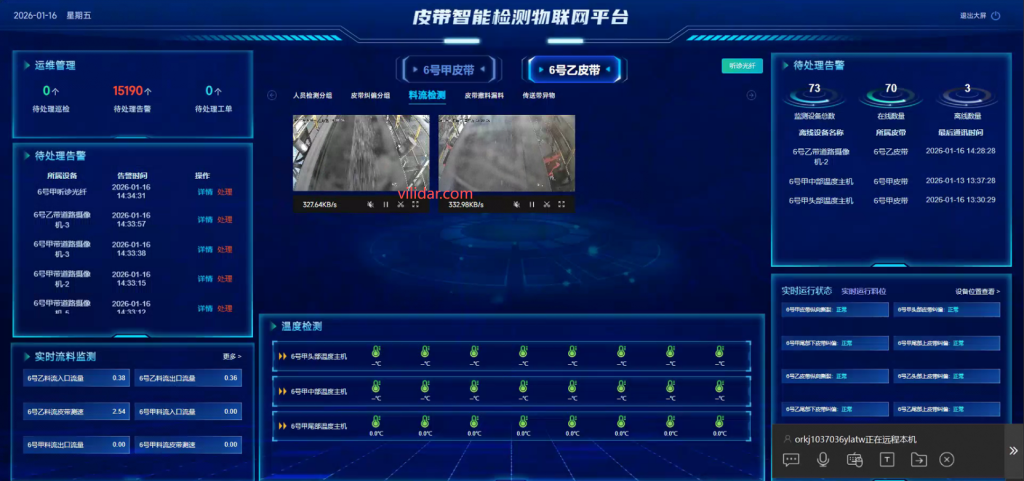
Vi-LiDAR ( Real-Time Alert )
By transforming coal conveying from a manually supervised process into a continuously monitored and quantifiable system, the solution delivers:
- Early detection of abnormal conveying conditions
- Reduced risk of unplanned conveyor shutdowns
- Lower dependence on manual inspection in hazardous environments
- Strong technical support for the plant’s “zero unplanned outage” objective
Conclusion
In modern power plants, coal conveying systems can no longer be treated as passive transport equipment. They are a critical part of the plant’s operational safety and reliability framework.
Vi-LiDAR’s LiDAR-based conveyor belt material flow measurement system provides engineering-grade sensing, predictive insight, and long-term reliability, forming a key foundation for unmanned inspection and intelligent operation in continuous power generation environments.


