Skip to content


In the wave of intelligent manufacturing, automated production workshops are the core carrier of industrial upgrading. LiDAR Volume Measurement transforms physical space into digital models, injecting “perception power” into workshop intelligence.
LiDAR’s Core Value
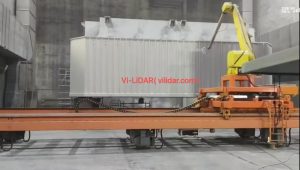
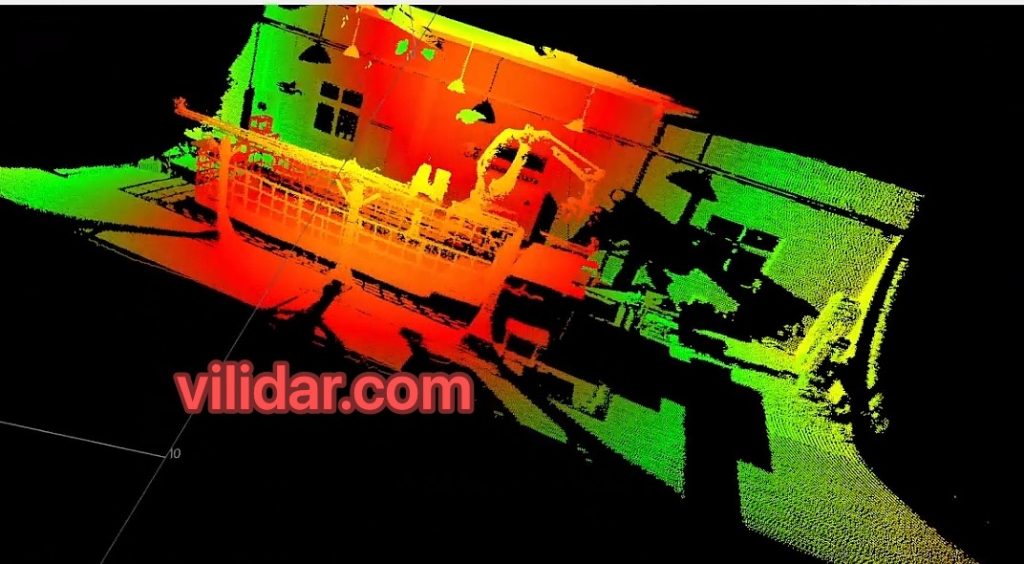
Vi-LiDAR Volume Measurement System, As a “space perception eye,” LiDAR is deployed at key positions (e.g., equipment tops, logistics channels) to capture environmental dynamics in real time. Through high-frequency scanning, it builds dynamic “digital twins” for analyzing robotic arm ranges, AGV paths, and mold space occupation. Using TOF (Time-of-Flight) technology, LiDAR emits laser pulses and receives reflected signals to generate “space fingerprints”—each point cloud coordinate (X,Y,Z) and reflection intensity restore millimeter-level geometric information.
Hardcore Applications
- Space Planning & Obstacle Avoidance: Analyze equipment layout via point cloud modeling to avoid interference, improving production line utilization.
- Quality Inspection: Scan part contours, calculate volume/flatness, compare with design parameters (e.g., engine housing tolerance), and intercept defects.
- Logistics Optimization: Volume Measurement System , Monitor cargo stacking volume in real time, assist AGV scheduling, and boost warehouse loading rates.
From physical production to digital modeling, LiDAR reshapes industrial scenes with “non-contact perception.” In smart factory construction, it links the physical and digital worlds, helping enterprises cut costs and enhance efficiency toward “intelligent manufacturing.”
LiDAR Volume Measurement System Design
Design Objectives
The design of this project aims to enhance its technological capabilities and increase its application value. Based on its functional categories and management requirements, an intelligent and modular design approach is proposed to create a comprehensive organic system with preset linkage plans. The entire system truly achieves “integration” and “intelligence” in management, ensuring technological advancement, economic feasibility, and practical reliability. The construction goals are as follows:
Cost reduction and efficiency improvement to enhance inventory efficiency.
Establishing an efficient management model to enhance overall enterprise management efficiency.
Enhancing the corporate brand image and influence through the construction of a high-standard and efficient material inventory system.