Skip to content


A Weighbridge Answers One Question. Does It Answer Yours?
A weighbridge records vehicle weight, but weight does not directly show the three-dimensional shape or volume of cargo inside a truck body. For irregular bulk materials such as sand and gravel, operations teams may also need volume information to understand loading conditions and review transport records.
A 3D LiDAR system captures point-cloud data from the truck and its cargo surface to calculate load volume. For procurement teams, the decision involves more than whether the equipment can measure volume. The system also needs to suit the site’s truck fleet and traffic flow, while supporting the required vehicle identification and data management processes.

Verify Empty and Loaded Vehicle Measurement
First, confirm that the system can capture 3D point clouds of both empty and loaded trucks and use point-cloud processing to calculate cargo volume based on the measurement data.
Ask the supplier to explain the measurement method, applicable vehicle types, calculation process, and relevant test conditions. For irregular bulk materials such as sand and gravel, it is also useful to understand how the system processes different cargo surface shapes.
A weighbridge and a 3D LiDAR system provide different types of information. A weighbridge records weight, while LiDAR adds information about cargo shape and volume. These data can support different aspects of transport management; volume measurement is not a direct replacement for weighing.
During procurement and acceptance, agree on the reference method, test vehicles, test procedure, and reporting format. Define separate acceptance requirements for static and dynamic measurement. Rather than relying on general claims such as “high accuracy,” request test results relevant to the actual site conditions.
Test Vehicle Recognition and Position Compensation
Truck dimensions, body structures, and cargo shapes vary. Vehicles may also enter or stop in slightly different positions within the measurement area.
Check whether the proposed vehicle recognition and position compensation capabilities cover the truck types used at the site. Ask the supplier to clarify the supported range of vehicle position deviations.
Testing should include representative vehicles and different stopping or passing positions. Check whether vehicle identification and measurement data are handled as expected. Agree in advance on how missed identification, incomplete data, and abnormal measurements will be addressed.
For dynamic measurement, also assess whether a single-channel or dual-channel configuration is appropriate for the site’s lane layout and traffic volume.
Select Static or Dynamic Measurement for the Site
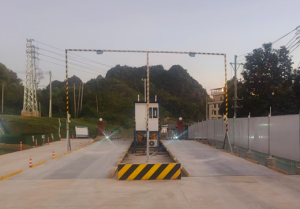
Static measurement may suit sites where trucks can stop in a designated measurement area. Dynamic measurement may be suitable for operations where vehicles pass through continuously, depending on vehicle speed, lane layout, and system configuration.
Do not select a measurement mode based only on a product brochure. Ask the supplier to explain the test methods, operating conditions, and results for both static and dynamic measurement. Then define acceptance requirements based on the actual site needs.
For outdoor installations, evaluate measurement performance and relevant environmental compensation under conditions that matter to the project, including rain, dust, and fog. Confirm the applicable operating conditions and limitations in the technical documentation.
Match Each Measurement to the Right Truck
When multiple trucks enter and leave the measurement area, each volume measurement result needs to be matched with the corresponding vehicle.
Depending on project requirements, additional equipment such as cameras, RFID readers, license plate recognition systems, or operator displays may be configured separately. Buyers should confirm the required equipment, compatibility, configuration scope, and integration arrangements with the supplier. They should also clarify how vehicle entry and exit records can be associated with volume measurement results.
During acceptance testing, consider practical operating conditions such as vehicle queues, missed reads, duplicate identification, and multiple trucks entering the measurement area close together. Verify whether the proposed record-matching process meets the site’s operational requirements.
When compatible cameras and related integration components are configured, 3D cargo-shape data can be linked with captured images to help provide traceable records for cargo handover, loading exception checks, and transport disputes.
Verify API and System Integration
If the company plans to transfer truck volume data to an existing management system or data platform, confirm before procurement whether the proposed solution provides an Open API suitable for the deployment.
Ask which data fields are available through the API, such as truck volume and other measurement-related information. If vehicle identification records or captured images need to be transferred, confirm whether these data are supported under the proposed configuration and integration scope.
Data fields, timestamps, transmission methods, failure handling, security requirements, and integration responsibilities should be clarified before implementation. Where necessary, conduct an end-to-end integration test to verify that data can enter the existing system according to the agreed workflow.
An available API does not automatically mean that every system can be integrated. Actual integration capabilities should be confirmed through project documentation and testing.
Truck Volume Measurement System: Buyer’s Acceptance Checklist
Before procurement or acceptance, review the following questions:
- Can the system capture point clouds of both empty and loaded trucks and calculate cargo volume?
- Has the supplier explained the measurement method, reference method, and test conditions?
- What test methods and acceptance criteria apply to static and dynamic measurement?
- Does vehicle recognition cover the truck types used at the site?
- Does the supported position compensation range meet the site’s vehicle positioning requirements?
- Is the single-channel or dual-channel configuration suitable for the traffic volume and lane layout?
- How are cameras, RFID, or license plate recognition records associated with measurement results?
- Can vehicle entry and exit records be matched with the corresponding volume measurements?
- Does the Open API support the required data transfer and integration with existing management systems or data platforms?
- Have test conditions, exception handling, corrective actions, and retesting requirements been agreed with the supplier?
Choose a Truck Volume Measurement System That Fits Your Site
Selecting a truck volume measurement system requires consideration of the site’s truck fleet, traffic flow, measurement mode, and data management requirements.
Vi-LiDAR provides 3D volume measurement solutions for industrial applications. For truck measurement projects, procurement teams can evaluate the proposed configuration against their operating processes and site conditions, then verify whether it meets project requirements through testing and mutually agreed acceptance criteria.
Planning a truck volume measurement project?
Contact ViLiDAR to discuss your truck types, lane layout, and site operating conditions for your project.